
New Hampshire winters are tough on vehicles. With heavy snowfall, frequent road salt applications, freezing temperatures, and road grime, your car’s paint takes a beating. Many drivers in areas like Hooksett, Manchester, Bedford, and surrounding towns wonder if ceramic coating is a smart investment to fight back against these harsh conditions.
In this post, we’ll explore how NH winters damage paint, what ceramic coating really does, its performance against salt and snow, how it stacks up against traditional wax, and whether it’s worth the cost for local drivers.
How NH Winters Damage Vehicle Paint
New Hampshire leads in road salt usage per mile in many reports, with massive amounts spread to melt ice and improve safety. While essential for winter driving, this salt is highly corrosive.
Road salt accelerates rust by speeding up oxidation when mixed with moisture. It penetrates scratches or chips in your clear coat, causing bubbling, peeling, and eventual exposure of bare metal. Salt clings to paint, especially in wheel wells, undercarriages, and lower panels, leading to pitting, flaking, and long-term corrosion.
Beyond salt, NH winters bring snow, ice, slush, and grime that trap contaminants against the surface. Freezing temps make washing harder, allowing buildup. UV rays (even in winter), tree sap, and debris add to fading, oxidation, and swirl marks from improper cleaning.
Without protection, these elements degrade paint quickly, hurting appearance and resale value—often requiring expensive repairs or repaints.
What Ceramic Coating Actually Does
Ceramic coating is a liquid polymer (often SiO2-based) that chemically bonds to your vehicle’s clear coat, forming a hard, semi-permanent protective layer—much tougher than factory clear coat.
Key benefits include:
- Hydrophobic properties: Water beads up and rolls off, carrying dirt, salt, and grime with it (self-cleaning effect).
- Chemical resistance: Shields against road salt, acidic contaminants, bird droppings, and tree sap.
- UV protection: Prevents fading and oxidation from sun exposure.
- Enhanced gloss and slickness: Delivers a deep, showroom shine that lasts years.
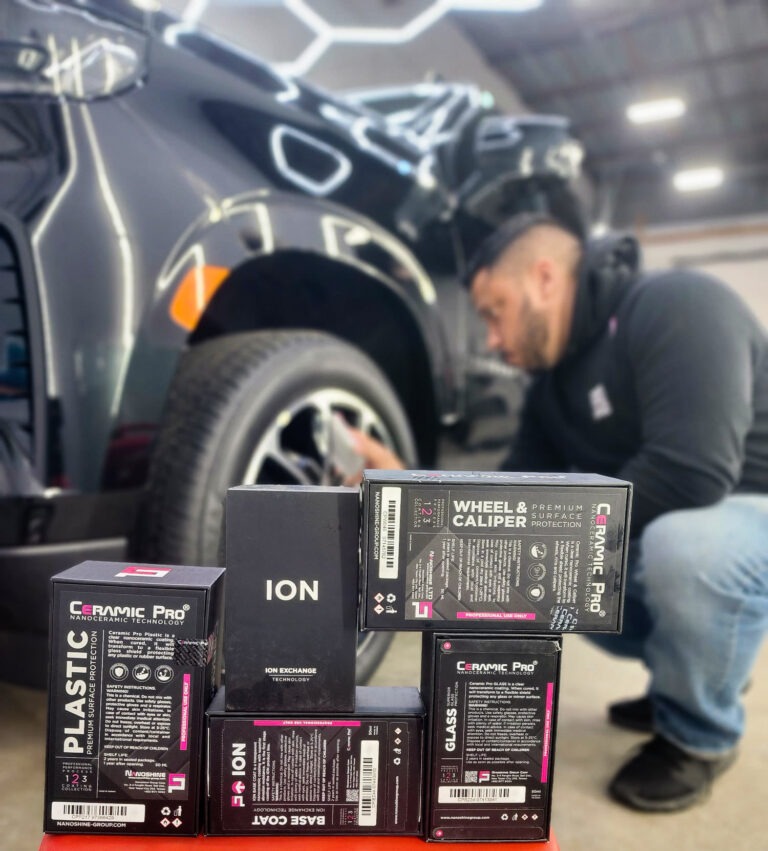
- Durability: Professional-grade coatings (like Ceramic Pro, Opti-Coat, or Gtechniq) last 2–7+ years with proper maintenance, far outpacing temporary solutions.
Applied by certified detailers after paint correction, it creates a barrier that’s resistant to minor scratches and environmental damage, ideal for NH’s variable weather.
Salt, Snow, and Road Grime Resistance
Ceramic coatings excel in snowy, salty climates like New Hampshire.
The hydrophobic surface repels water, melted snow, and slush, making it harder for ice to bond directly and easier to remove snow buildup. Salt and grime don’t adhere as strongly, most rinse off during washes or bead away naturally.
The coating’s chemical resistant barrier blocks salt from penetrating and corroding paint. It reduces etching from road chemicals (like magnesium chloride) and prevents contaminants from bonding tightly.
In harsh winters, this means less frequent deep cleans, reduced risk of rust spots, and easier maintenance, even when cold temps limit washing. Many NH detailers note coated vehicles stay cleaner longer and require less effort to restore after storms.
While not invincible (regular washing is still key to remove accumulated salt), ceramic coating significantly mitigates winter damage compared to unprotected paint.
Ceramic Coating vs Wax in Winter
Traditional wax provides a glossy finish and some UV/water resistance but falls short in NH winters.
- Durability: Wax lasts 1–3 months (often less in salt/snow); ceramic lasts years without reapplication.
- Protection level: Wax offers basic barriers but breaks down quickly from salt, chemicals, and cold, leaving paint vulnerable. Ceramic provides superior resistance to salt, grime, snow, and harsh elements.
- Maintenance: Wax requires frequent reapplication (challenging in winter). Ceramic needs only regular washes; its slick surface makes cleaning easier.
- Winter performance: Wax can wash away or degrade in slush/salt; ceramic holds up better, with stronger hydrophobicity and chemical resistance.
For New Hampshire drivers facing long winters, ceramic coating outperforms wax for lasting protection and reduced hassle—many switch after seeing how wax fails mid-season.
Ceramic Coating Consultation
If you’re tired of battling NH winter damage and want long-term paint protection, ceramic coating could be the upgrade your vehicle needs.
Professional application ensures the best results, with warranties and proper prep for maximum durability.
Ready to protect your ride from salt, snow, and grime? Contact a trusted local detailer in New Hampshire today for a free ceramic coating consultation. Get personalized advice, see real examples, and discover how it can keep your car looking showroom-fresh year-round.
Schedule your Ceramic Coating Consultation in New Hampshire now!